Alabama and Florida Gulf Coast Real Estate and Community News

Oct. 4, 2024

Why Headlines About Dropping Home Prices Don’t Tell the Full Story


If you’ve seen recent headlines about the median asking price of homes dropping, you might be worried that home values are plummeting. But that’s not the full story. In reality, home values are still on the rise, even as the median price has dipped slightly. Let’s break down what’s really happening in the market so you can make informed decisions without getting caught up in misleading headlines.

Homes on the Market Are Smaller

The main reason for the dip in the median asking price is the mix of homes currently for sale. Median price refers to the middle point of all homes listed for sale, and this number can be affected by the types of homes on the market.

Here’s an easy way to understand it. Imagine you have three coins: one nickel and two dimes. The median value of these coins is 10 cents. But if you swap one of the dimes for a nickel, the median drops to five cents. The value of the individual coins hasn’t changed, just the mix of them.

Similarly, right now, more smaller, less expensive homes are on the market, which is bringing down the overall median price. That doesn’t mean that home values are dropping.

As Danielle Hale, Chief Economist at Realtor.com, explains:

“The share of inventory of smaller and more affordable homes has grown, which helps hold down the median price even as per-square-foot prices grow further.”

So, while the median price is lower, the value of homes is still increasing.

Price Per Square Foot Is a Better Measure of Home Values

One of the best ways to measure home values is by looking at the price per square foot. This metric shows how much you’re paying for the actual space inside the home. Unlike the median price, price per square foot accounts for the size of the home, making it a more reliable indicator of market value.

Recent data shows that the national price per square foot is still rising, even as the median asking price has dropped. This means that while smaller homes are affecting the median price, the value of a typical home is still going up. Ralph McLaughlin, Senior Economist at Realtor.com, confirms this:

“When a change in the mix of inventory toward smaller homes is accounted for, the typical home listed this year has increased in asking price compared with last year.”

So, don’t be misled by headlines about falling prices—home values are still appreciating.

National Trends vs. Local Markets

It’s important to keep in mind that while national trends give a big-picture view, home prices can vary significantly by region. According to the Federal Housing Finance Agency (FHFA), the U.S. housing market has experienced positive annual appreciation every quarter since 2012. However, local markets may be experiencing different conditions.

That’s why it’s essential to work with a trusted real estate agent who can provide insights into what’s happening in your specific area.

Bottom Line

The drop in the median asking price doesn’t mean home values are falling. It’s mostly due to the increased number of smaller, less expensive homes on the market. To get a clearer picture of the market, focus on price per square foot, which is a more accurate measure of home values—and those prices are still going up.

If you’re concerned about home prices in your area, reach out to a local real estate agent for personalized insights into your market. Don’t let the headlines cause unnecessary fear—home values are still climbing, and now may be a great time to make your move!

Posted in General Articles
Oct. 2, 2024

Why Now is the Best Time to Buy: Don’t Wait for More Competition!

After months of high mortgage rates and affordability challenges, many potential homebuyers now have a unique opportunity to make their move. With rates starting to trend downward, today’s housing market presents a rare sweet spot for buyers—but it won’t last forever. If you’ve been putting your homebuying plans on hold, here’s why you should act sooner rather than later.

What Happens When Rates Drop?

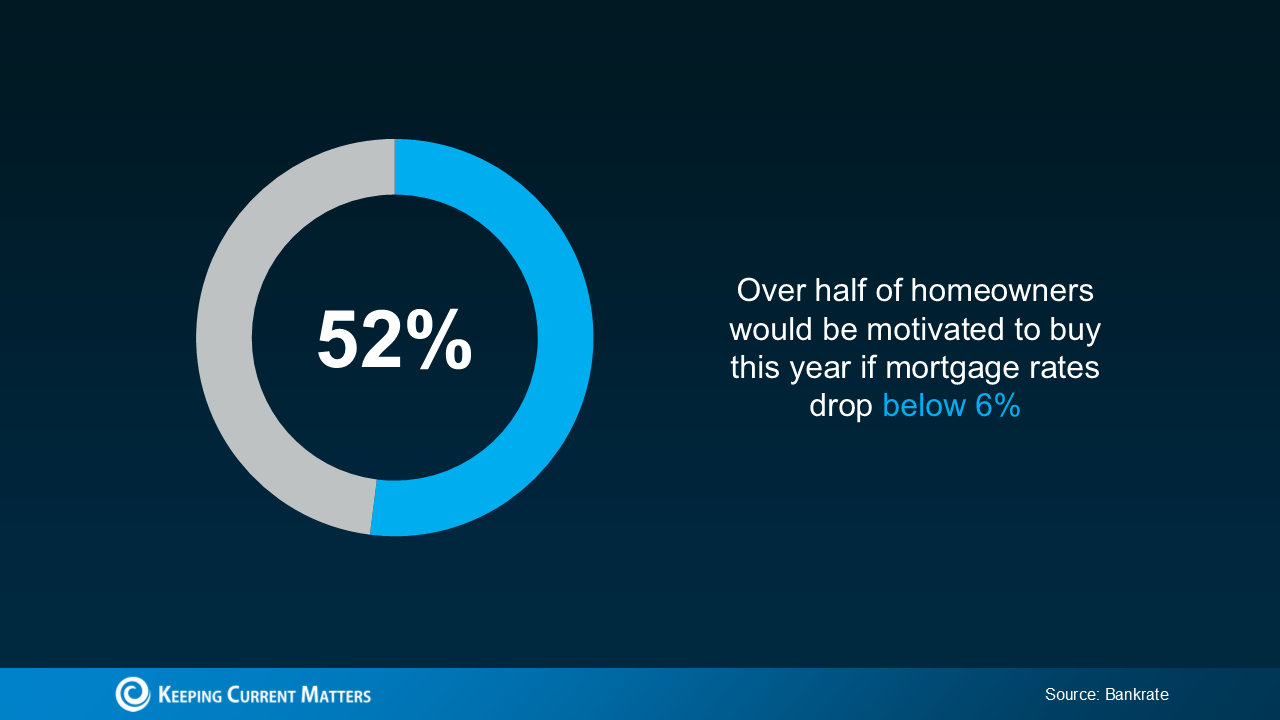
As mortgage rates continue to ease, more buyers are expected to re-enter the market. According to a survey by Bankrate, over half of homeowners say they’d be motivated to buy if rates drop below 6%. With current rates already in the low 6% range, we’re not far off from reaching that threshold.

When rates drop into the 5% range, more buyers will jump back into the market. This increased demand will bring more competition, potentially driving home prices up. Nadia Evangelou, Senior Economist at the National Association of Realtors (NAR), warns:

“The downside of increased demand is that it puts upward pressure on home prices as multiple buyers compete for a limited number of homes. In markets with ongoing housing shortages, this price increase can offset some of the affordability gains from lower mortgage rates.”


This Is the Sweet Spot Homebuyers Have Been Waiting For


Why Waiting Could Backfire

It’s tempting to wait for rates to drop further, but doing so could work against you. As buyer demand rises, competition for homes will intensify, and prices may increase, which could wipe out any savings from a slightly lower interest rate.

Right now, however, you have the advantage. With fewer buyers in the market, there’s less competition, and this creates a unique opportunity to find the right home without getting into bidding wars. As Mike Simonsen, Founder of Altos Research, notes:

“Mortgage payments on the typical-price home are 7% lower than last year and are 13% lower than the peak in May 2024.”

This means homeownership is more affordable than it has been in recent months, allowing buyers to secure a better deal before the market heats up.

More Options Than Before

Another advantage of buying now is the improved supply of homes. Although housing inventory is still low overall, the number of homes for sale has been steadily growing. Ralph McLaughlin, Senior Economist at Realtor.com, shares:

“The number of homes actively for sale continues to be elevated compared with last year, growing by 35.8%, a 10th straight month of growth, and now sits at the highest since May 2020.”

With more options on the market and less competition, you can take your time and find a home that truly meets your needs.

Why Waiting Could Cost You

Trying to time the market perfectly is nearly impossible. Waiting for rates to drop just a little more could lead to a surge in buyer demand, making it harder for you to find a home and potentially driving up prices. As Greg McBride, Chief Financial Analyst at Bankrate, advises:

“It’s one of those things where you should be careful what you wish for. A further drop in mortgage rates could bring a surge of demand that makes it tougher to actually buy a house.”

The Bottom Line

If you’re thinking about buying a home, now may be the best time to act. Current conditions present a rare sweet spot where affordability has improved, inventory is growing, and buyer demand is still relatively low. But as rates continue to decline, more buyers will enter the market, increasing competition and driving up home prices.

Don’t wait until the market shifts and you find yourself dealing with more competition. Get ahead of the curve and make your move today! Connect with a trusted real estate agent to explore your options and take advantage of the current market conditions.

Posted in General Articles
Oct. 1, 2024

Avoid Homebuyer Regrets: What You Need to Know Before Purchasing

Becoming a homeowner is a big milestone, and for most people, it's a rewarding experience. In fact, according to LendingTree, 80% of recent buyers are happy with their decision. However, that doesn’t mean all homeowners are without regrets. A survey from Anytime Estimate shows that nearly 3 out of 4 buyers who purchased a home in 2021 or 2022 have some regrets. From spending more than necessary to rushing the buying process, let’s take a look at the most common homebuyer regrets and how you can avoid them.

1. Spending More Than Necessary

One of the top regrets among homebuyers is overspending. While it may feel like you’ve secured a great deal, unexpected costs like choosing the wrong mortgage can add up quickly. A significant number of buyers don’t shop around for the best mortgage rates, potentially losing thousands over the life of their loan. Research from LendingTree suggests buyers in major metro areas lose an average of $63,151 by settling for the first mortgage offer.

How to Avoid This Mistake:
Get pre-approved for a mortgage and compare multiple lenders. Shopping around can save you money and give you peace of mind knowing you’ve made the best choice. We can connect you with trusted lenders to help get you started.

2. Rushing Into a Home Purchase

In competitive markets, acting fast is necessary, but rushing into a purchase without fully evaluating the property is a mistake many buyers regret. Over 25% of homebuyers reported they felt remorse about speeding through the process.

How to Avoid This Mistake:
Stay grounded and think through your choices carefully. It’s easy to get caught up in emotions, but make sure the home fits both your financial needs and lifestyle. We can help you set priorities and guide you through the process with a calm, reasoned approach.

3. Miscalculating the Costs of Homeownership

Beyond your mortgage, there are ongoing costs like property taxes, insurance, utilities, and maintenance. Many buyers underestimate these expenses, leading to regret after purchase. In fact, nearly half of buyers who regretted their home purchase admitted they miscalculated how much they would spend to live in their home.

How to Avoid This Mistake:
Take time to understand the full scope of costs associated with the home, including maintenance. Homes with high HOA fees, or older homes that require regular upkeep, can quickly strain your budget. We can help estimate these costs and find options that fit your financial plan.

4. Underestimating Time for Maintenance and Renovations

While homeownership brings joy, it also comes with responsibilities. Some buyers regret choosing homes that are too high-maintenance or fixer-uppers that demand more time and energy than anticipated.

How to Avoid This Mistake:
Be realistic about the time you’re willing to commit to home upkeep. If you don’t want to spend weekends working on home improvement projects, consider avoiding homes that require extensive maintenance or renovation. We’ll help you find a property that suits your lifestyle.

5. Skipping a Home Inspection

In a hot market, it can be tempting to skip the home inspection to make your offer more attractive, but this can lead to significant issues down the road. A thorough home inspection can uncover potential problems and save you money in the long run.

How to Avoid This Mistake:
Never skip a home inspection, no matter how competitive the market is. Being on-site during the inspection allows you to ask questions and better understand the condition of the home. We can recommend experienced home inspectors to help ensure you're making a sound investment.

6. Choosing a Home That Doesn’t Fit

Some buyers regret choosing a home that doesn’t fit their long-term needs. Whether it’s a lack of space or a location that complicates daily life, mismatched homes can lead to dissatisfaction.

How to Avoid This Mistake:
Create a list of non-negotiable "must-haves" before starting your search. Compromising too much on these essentials can lead to regrets later. We’ll help you identify what’s most important to you and find a home that checks all the right boxes.

7. Purchasing Without Professional Help

Navigating the real estate market on your own can be overwhelming and lead to costly mistakes. Research shows that 86% of buyers use a real estate agent, and 89% would recommend their agent to others.

How to Avoid This Mistake:
Work with a licensed real estate professional to guide you through the process. An experienced agent can help you avoid pitfalls, negotiate on your behalf, and make informed decisions that benefit you in the long term. Best of all, in most cases, the seller pays the agent's commission, so you get expert help at no cost!

Bottom Line

Avoiding homebuyer regrets is possible with the right guidance and preparation. By understanding common pitfalls and working with a trusted real estate agent, you can confidently navigate the homebuying process and make choices that you’ll be happy with for years to come.

If you’re ready to buy a home or want to learn more about the process, reach out to us for a free consultation today! We’re here to help you make informed decisions every step of the way.

Posted in General Articles
Sept. 30, 2024

Why Buying a Home May Be Cheaper Than Renting Right Now!

Why Buying a Home Could Be Cheaper Than Renting in Your Area

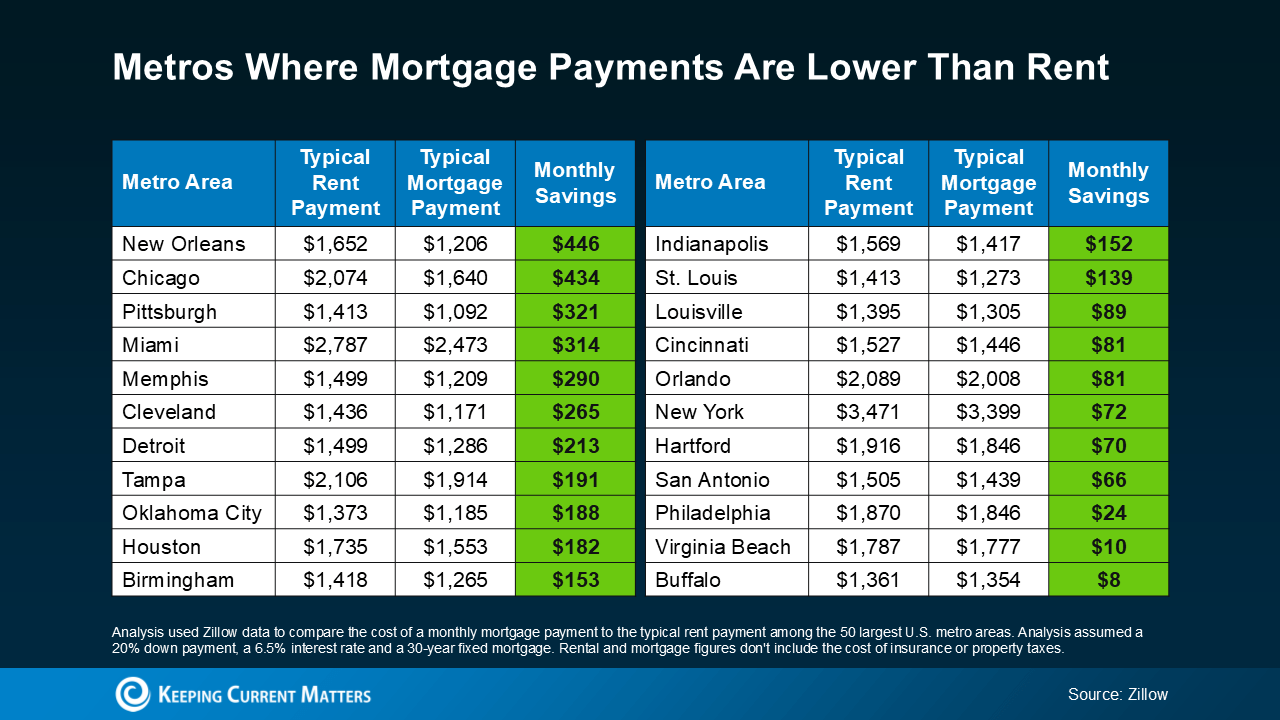
If you’ve been renting for a while, you’ve probably felt the pinch of rising rent costs. But here’s some great news—according to a recent study from Zillow, in 22 of the 50 largest metro areas, monthly mortgage payments are now lower than rent payments. This shift in affordability is opening up new opportunities for renters who are ready to make the leap into homeownership.

Mortgage Payments vs. Rent Payments: A Surprising Shift

As mortgage rates have eased from their recent highs, home prices have moderated, and inventory levels have increased, making homeownership more affordable. This combination of factors means that in many parts of the country, it’s now cheaper to buy a home than rent one.


 monthly mortgage payments are now lower than rent payments


If your city isn’t on the list yet, don’t worry. Housing markets are changing quickly, and it’s only a matter of time before more areas see similar trends. That’s why it’s crucial to speak with a local real estate agent to stay informed about what’s happening in your specific area.

Understanding the Full Picture

Zillow’s study compares rent payments with principal and interest payments on a mortgage, but it’s important to factor in other costs of owning a home. Homeowners also need to budget for taxes, insurance, utilities, and maintenance. On the flip side, renters have additional costs as well, such as renters’ insurance, utilities, and sometimes even parking or amenity fees.

Doing a thorough cost comparison may feel tedious, but it could reveal that what seemed out of reach just a few months ago is now much more affordable. As Orphe Divounguy, Senior Economist at Zillow, points out:

"...for those who can make it work, homeownership may come with lower monthly costs and the ability to build long-term wealth in the form of home equity—something you lose out on as a renter."

Why Now Could Be the Right Time to Buy

With mortgage rates coming down and inventory ticking up, you may have more options to choose from—and at better prices than before. This makes now an ideal time to explore whether buying a home is a good move for you.

Whether you’re in one of the metros where buying is already cheaper than renting or in a market where the tides are turning, the important thing is to have a conversation with a local real estate expert. They’ll help you assess your current situation and determine if homeownership is a realistic and financially sound option for you.

Bottom Line

If you’re tired of renting and ready to explore homeownership, now could be a perfect time to see if the scales have tipped in your favor. With falling mortgage rates and increased housing supply, you may be closer to owning a home than you think. Reach out to a real estate agent today to do the math and find out if buying makes sense for you now or in the near future.

Posted in General Articles
Sept. 28, 2024

Debunking Real Estate Myths: Why Choosing the Right Agent Matters

When it comes to buying or selling a home, one of the most crucial decisions you’ll make is selecting the right real estate agent. That choice directly impacts how smooth and successful your experience will be. But before you make your decision, it’s essential to clear up some common myths that might be holding you back from making the best choice.

Myth #1: All Real Estate Agents Are the Same

Many people assume that all agents are the same, and it doesn't matter who you work with. However, agents vary significantly in terms of experience, specialties, and market knowledge, all of which can greatly affect your results. Just like you wouldn’t hire a stylist who specializes in children’s hair for an important event, you should seek an agent who is a true expert in the type of transaction you're involved in. Ask about their experience level, what types of properties they specialize in, and how well they know the local market. By taking the time to find the right agent, you’re setting yourself up for a smoother, more successful process.

Myth #2: You Can Save Money by Not Using an Agent

Some sellers believe they can save money by not hiring a professional agent. But in reality, the expertise, negotiation skills, and market knowledge an agent provides can save you more money in the long run. Without a knowledgeable agent on your side, you run the risk of missteps like overpricing your home, which could lead to it sitting on the market for too long. An experienced agent can help you price your home right, avoid costly mistakes, and negotiate the best deal, ultimately saving you money and stress.

Myth #3: Agents Will Push You To Spend More

Worried that a real estate agent will pressure you into buying a more expensive home just to increase their commission? A good agent will respect your budget and work to find a property that truly fits your financial situation and needs. A professional agent will focus on helping you understand what you can afford in the current market, showing you homes that meet your criteria, and guiding you to the best options for you—not trying to pad their commission check.

Myth #4: Market Conditions Are the Same Everywhere, So Why Do I Need a Pro?

Many assume that housing market conditions are consistent everywhere, but real estate markets are highly localized. Market conditions can vary significantly from one neighborhood to the next. This is why it’s essential to work with an agent who’s knowledgeable about your specific local market. The right agent will not only explain national trends but also give you a full understanding of how your local market stacks up. They’ll provide crucial insights, ensuring that you’re well-informed when making decisions.

Bottom Line

Choosing the right real estate agent is not just helpful—it’s essential. Don’t let these myths hold you back from receiving expert guidance. A trusted local agent has the market knowledge, negotiation skills, and resources to help you make informed decisions in what could be one of the most important financial decisions of your life. Take the time to find an experienced pro who can ensure the best possible outcome for you.

If you’re ready to make a move, connect with an agent today to help you navigate the complexities of buying or selling your home with confidence.

Posted in General Articles
Aug. 26, 2024

What Mortgage Rate Are You Waiting For?


What Mortgage Rate Are You Waiting For?

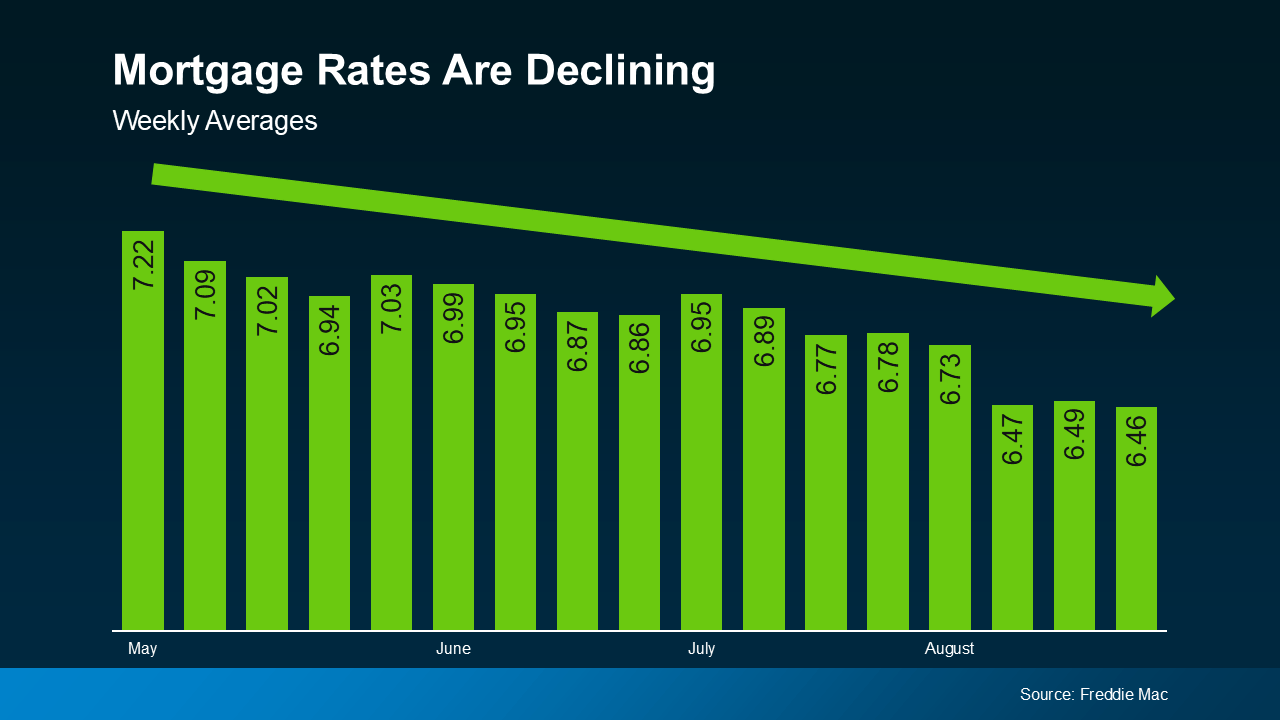
You won’t find anyone who’s going to argue that mortgage rates have had a big impact on housing affordability over the past couple of years. But there is hope on the horizon. Rates have actually started to come down. And, recently they hit the lowest point we’ve seen in 2024, according to Freddie Mac (see graph below):

No Caption ReceivedAnd if you’re thinking about buying a home, that may leave you wondering: how much lower are they going to go? Here’s some information that can help you know what to expect.

Expert Projections for Mortgage Rates

Experts say the overall downward trend should continue as long as inflation and the economy keeps cooling. But as new reports come out on those key indicators, there’s going to be some volatility here and there.

What you need to remember is it’s not wise to let those blips distract you from the larger trend. Rates are still down roughly a full percentage point from the recent peak compared to May.

And the general consensus is that rates in the low 6s are possible in the months ahead, it just depends on what happens with the economy and what the Federal Reserve decides to do moving forward.

Most experts are already starting to revise their 2024 mortgage rate forecasts to be more optimistic that lower rates are ahead. For example, Realtor.com says:

“Mortgage rates have been revised slightly lower as signals from the economy suggest that it will be appropriate for the Fed to begin to cut its Federal Funds rate in 2024. Our yearly mortgage rate average forecast is down to 6.7%, and we revised our year-end forecast to 6.3% from 6.5%.”

Know Your Number for Mortgage Rates

So, what does this mean for you and your plans to move? If you’ve been holding out and waiting for rates to come down, know that it’s already happening. You just have to decide, based on the expert projections and your own budget, when you’ll be willing to jump back in. As Sam Khater, Chief Economist at Freddie Mac, says:

“The decline in mortgage rates does increase prospective homebuyers’ purchasing power and should begin to pique their interest in making a move.”

As a next step, ask yourself this: what number do I want to see rates hit before I’m ready to move?

Maybe it’s 6.25%. Maybe it’s 6.0%. Or maybe it’s once they hit 5.99%. The exact percentage where you feel comfortable kicking off your search again is personal. Once you have that number in mind, you don’t need to follow rates yourself and wait for it to become a reality.

Instead, connect with a local real estate professional. They’ll help you stay up to date on what’s happening and have a conversation about when to make your move. And once rates hit your target, they’ll be the first to let you know.

Bottom Line

If you’ve put your moving plans on hold because of higher mortgage rates, think about the number you want to see rates hit that would make you re-enter the market.

Once you have that number in mind, connect with a real estate professional so you have someone on your side to let you know when we get there.

Posted in General Articles
Nov. 2, 2023

Unlocking the Power of Accessory Dwelling Units (ADUs): A Game Changer for Homebuyers and Homeowners

Are you on the hunt for a home that fits your budget, or perhaps you're already a homeowner with evolving needs? Accessory Dwelling Units (ADUs) could be the answer to your housing dreams. In this blog post, we'll explore what ADUs are and how they can make a significant difference in your life as a homebuyer or homeowner.

What Exactly Are ADUs? ADUs, also known as Accessory Dwelling Units, are small residences that share a single-family lot with a primary dwelling. These standalone living spaces typically feature a kitchen or kitchenette, a bathroom, and a sleeping area. ADUs can take various forms – they may be located within, attached to, or detached from the primary residence. They can be created out of existing structures, like a garage, or built from the ground up.

The regulations surrounding ADUs can vary depending on your location, so it's essential to consult with a local real estate professional to understand the specifics in your area.

The Advantages of ADUs ADUs come with a host of benefits for both potential homebuyers and homeowners. Here are some of the standout advantages:

1. Living Close but Separate: ADUs offer the perfect solution for those who want to live in close proximity to their loved ones while maintaining separate living spaces. Whether it's for keeping an eye on childcare or simply enjoying each other's company while having privacy when needed, ADUs are a great option. You can explore buying a home with an ADU or adding one to your existing property, enabling independent living for family members.

2. Aging in Place: For older individuals who want to be near their loved ones, ADUs provide a unique opportunity. This setup allows seniors to enjoy independence while having the support of family members when required. If you have aging parents and wish to have them close by, consider a home with an ADU or building one on your property.

3. Affordable to Build: Due to their smaller size, ADUs are generally more cost-effective to construct than larger, standalone homes. Building an ADU can also boost your property's overall value.

4. Generating Additional Income: If you own a property with an ADU or decide to build one, it can become a source of rental income that can contribute to your mortgage payments. While traditionally ADUs were tied to the primary residence, some states are changing this rule, allowing more flexibility in usage. To explore your options, it's advisable to work with a professional who can provide guidance.

As Scott Wild, SVP of Consulting at John Burns Research, highlights: "It’s gone from a small niche in the market to really a much more impactful part of new housing."

In Conclusion ADUs present exciting opportunities for both homebuyers and homeowners. If you're intrigued by the potential of ADUs, it's a wise move to connect with a local real estate professional who can guide you through local codes, regulations, and available ADU options in your specific market. Don't miss out on the incredible benefits that Accessory Dwelling Units can bring to your housing journey.

Posted in General Articles
Oct. 23, 2023

Understanding Home Price Trends: What You Need to Know

If you've ever dreamed of buying your own place or selling your current house to upgrade, you're likely familiar with the rollercoaster of emotions that changing home prices can stir up. It's a journey filled with financial goals, doubts, and a dash of anxiety that many have experienced. But if you've put off your plans to move due to concerns about home prices dropping, it's time to put those worries to rest. The truth is, home prices are not on a downward spiral; in fact, they're heading in the opposite direction.

Home Prices Are On the Rise

National data from several credible sources clearly indicates that home prices have been consistently increasing throughout this year. Take a look at the graph below for a visual representation:

The graph illustrates the situation. In the first half of 2022, home prices experienced a significant surge, as shown by the green bars on the left side of the graph. These increases were striking and unsustainable.

Subsequently, during the latter half of the year, prices underwent a correction and started to dip slightly (highlighted in red). However, these minor declines were shallow and short-lived. Unfortunately, the media heavily focused on these drops in their headlines, which led to widespread fear and uncertainty among consumers.

The Uncovered Truth

What hasn't received enough attention is the fact that in 2023, home prices are once again on the upswing, but this time at a more normal and sustainable pace (as indicated by the green bars on the right side of the graph). Following the period of excessive price gains and the necessary corrections in 2022, the return to a more typical rate of price appreciation this year is excellent news for the housing market.

Orphe Divounguy, Senior Economist at Zillow, explains the trajectory of changing home prices over the past 12 months:

"The U.S. housing market has surged over the past year after a temporary hiccup from July 2022-January 2023... That downturn has proven to be short-lived as housing has rebounded impressively so far in 2023."

What's Ahead for Home Prices?

It's essential to note that home price appreciation typically begins to ease up at this time of year. As that happens, there's a potential risk that the media may misinterpret slower price growth (a deceleration of appreciation) as falling home prices (depreciation). It's vital not to be misled – slower price growth is still growth.

Why Are Home Prices Increasing?

One significant reason for the resurgence in home prices is the persistent shortage of available homes for sale relative to the demand from prospective buyers. Higher mortgage rates, while moderating buyer demand, also discourage homeowners from selling and losing their current low mortgage rates to secure a higher rate for their next home.

As a result, both buyers and sellers have been affected by higher mortgage rates, influencing the supply and demand balance in the housing market. Freddie Mac elaborates on this:

"While rising interest rates have reduced affordability—and therefore demand—they have also reduced supply through the mortgage rate lock-in effect. Overall, it appears the reduction in supply has outweighed the decrease in demand, thus house prices have started to increase..."

How This Impacts You

For Buyers: If you've been delaying your home purchase due to concerns about a potential drop in home values, the knowledge that home prices are on the rise should offer you peace of mind. Buying a home can provide you with an opportunity to own an asset that typically appreciates over time.

For Sellers: If you've been hesitant to put your house on the market because of worries about fluctuating home prices, now may be an excellent time to collaborate with a real estate agent and list your property. Recent data supports the notion that home prices have turned in your favor.

Bottom Line

If the fear of declining home prices has been holding you back, you can take solace in the data, which indicates that home prices are increasing across the country. To get a clear picture of how home prices are evolving in your local area, consider working with a trusted local real estate agent. Don't let misleading headlines influence your decisions; make informed choices based on the real state of the market.

Posted in General Articles
Oct. 13, 2023

Home Prices Are Not Falling

In the latter part of last year, the housing market was rife with projections of an impending crash in home prices for 2023. Media outlets widely circulated these forecasts, painting a picture of doom and gloom in the housing market. If this left you questioning your plans to buy or sell, here's the truth you need to know.

Home Prices Never Crashed

First and foremost, let's dispel the myths. Despite the ominous headlines, the actual data reveals that home prices displayed remarkable resilience and performed far better than the media portrayed. Take a look at the graph below for a clearer picture:

This graph draws on data from three reputable sources, clearly illustrating that prices have already rebounded after experiencing only minor declines on a national scale. This is a far cry from the catastrophic crash that many articles were predicting.

The declines that did occur, marked in red on the graph, were neither severe nor prolonged. As noted by Nicole Friedman, a reporter at the Wall Street Journal (WSJ):

"Home prices aren't falling anymore... The surprisingly quick recovery suggests that the residential real-estate downturn is turning out to be shorter and shallower than many housing economists expected..."

Despite sensational media coverage about home prices taking a hit, the slight correction that did happen is now a thing of the past. In simple terms, the data proves that home prices aren't falling anymore – in fact, they're on the rise.

What's on the Horizon for Home Prices?

The consensus among experts is that home price growth will continue in the coming years, returning to more typical levels for the market. This implies that we'll still see home prices appreciate, albeit at a slower pace than in recent years – and that's a positive development.

Certain news sources may interpret slowing home price growth as another downturn and publish stories that suggest prices are falling again. Unfortunately, the return of such misleading headlines is impacting the sentiments of homebuyers. This can be observed in the Consumer Confidence Survey from Fannie Mae, as shown in the graph below:

While the percentage of Americans anticipating price drops has been gradually declining this year, recent Consumer Confidence data shows a slight uptick in this perception, as indicated in red on the graph. This is somewhat surprising, given that the actual home price data points to an upward trend. It underscores the influence that media coverage still exerts on public opinion.

Don't Fall for the Headlines

The bottom line is that, despite what the media might suggest, the data shows that home prices aren't falling anymore. So, don't let sensational headlines intimidate you or put your plans on hold. Rely on a trusted real estate professional who can cut through the noise and provide you with accurate information about what's truly happening in your local housing market.

Remember, in the world of real estate, data speaks louder than headlines

Posted in General Articles
Oct. 4, 2023

Is Real Estate Investment Right for You? 3 Signs You Should Consider Income Properties

        Income Properties Are Trending, But Is Landlord Life for You?


If the thought of investing your money into brick and mortar—or perhaps some stylishly-painted siding—excites you, join the club. 


Investing in real estate has long been one of Americans' favorite ways to grow their wealth. In fact, over 70% of single-family rental properties are currently owned by individual investors rather than corporations, according to Census data.1


Moreover, a decade's worth of Bankrate surveys has found that Americans often prefer real estate for long-term wealth building over other investments. According to Bankrate's latest survey, for example, Americans have historically embraced real estate, in part, because of the strong return on investment it can offer—especially to investors willing to stick with a property over time.2 It’s also a popular way to hedge against inflation since both rental income and property values tend to rise in tandem with overall prices.3


Now, as higher interest rates continue to push priced-out homebuyers to the sidelines, a new crop of “mom and pop” investors are eyeing the mushrooming rental market as a potential goldmine.4 Interest in buying a home to both live in and rent is also on the rise, especially amongst cash-strapped buyers looking to supplement their mortgage payments.5


But how do you know if you’re well-suited to take advantage of these real estate investment opportunities? Here are three signs that owning a rental property could be right for you.


  1. YOU'RE A HOMEBUYER WHO WANTS HELP COVERING THE MORTGAGE


If you're looking for a creative way to buy a home without overspending, “house hacking” could be the answer. Increasingly popular with first-time homebuyers and budget-conscious investors, house hacking simply means buying a home that you intend to live in while renting out a portion of it to one or more tenants.5


House hacking also tends to be easier to break into than traditional real estate investing since you don't need as high a credit score or as large a down payment to qualify for a mortgage. In fact, some government-backed mortgage programs will let you buy a primary residence with little to no money down.6 Buying a home you don't plan to live in, by contrast, may require you to put down as much as 15% to 25% to qualify for a loan.7  


If you house hack, the money you collect for rent each month can help cover your mortgage and other homeownership expenses. Depending on your setup, you may also be able to save on utility bills by splitting them with your tenant or tacking a portion onto their monthly rent. Another major advantage of house hacking is that it entitles you to certain tax benefits and deductions available only to landlords.8


When it's time to start your search, we can help you find a property that's ideal for house hacking, such as a house with a walkout basement, a multifamily unit, or a home with enough outdoor space to build an accessory dwelling unit or garage apartment.


  1. YOU'RE AN INVESTOR LOOKING FOR STEADY AND RELIABLE INCOME


If you’re not crazy about the idea of a live-in tenant but still desire an additional stream of income, a dedicated long-term rental property could be a better option for you. Besides the monthly proceeds, purchasing a rental home can also add diversity and long-term stability to your investment portfolio and help you build wealth over time.9


According to data from the Federal Reserve, real estate owners have historically prospered. In early 2020, for example, the median home was worth almost triple what it was 30 years prior. Then, during the pandemic-era real estate boom, average home prices grew at an especially frenzied clip, climbing by nearly 50%, on average, in just two and a half years.10


However, the rate of appreciation can be hard to predict, so it’s prudent to invest in a property that also offers positive cash flow, which means the rent you take in exceeds your expenses. This strategy helps to ensure that you’ll put money in your pocket each month, even if the property’s value takes time to grow.


While today’s higher mortgage rates can make it more challenging for landlords to turn a profit, investment opportunities aren’t reserved for cash buyers. In fact, currently, almost 60% of real estate investors take out a loan to finance their purchase, according to Thomas Malone, an economist at the real estate data firm CoreLogic.4  He also notes that more small investors are stepping in to meet demand for rental housing, which has grown since many would-be buyers remain priced out of the purchase market.4


If you want to explore opportunities for a residential rental property that's good for your wallet and attractive to renters, we can help. Reach out with questions or to schedule a free consultation. 


  1. YOU'RE AN EXPERIENCED INVESTOR LOOKING TO MAXIMIZE YOUR POTENTIAL RETURNS


Another increasingly popular way to draw income from an investment property is to convert it to a short-term vacation rental. But beware: This strategy can be riskier as some municipalities have tightened rental restrictions and others are suffering from market oversaturation.11,12


With that said, if you're an experienced investor who can afford to take on some uncertainty, then investing in a short-term rental could make sense for you. 


If you find the right property, for example, you could earn significantly more renting it short-term on a platform like Airbnb than if you rented the home to a long-term tenant.11


The key is to keep it occupied as much as possible at a premium nightly rate. To do that, you’ll need some marketing savvy, hospitality skills, and business acumen. Of course, you can always hire a professional property manager, but you’ll need to factor the cost into your budget.


The vacation rental market enjoyed a boom during the pandemic, and some inexperienced investors are finding they bit off more than they can chew. As a result, there's an opportunity to snap up some of these properties, but you'll need some cash on hand and a willingness to learn the business.12


We can help you scout opportunities in our local market or, if you’re interested in investing in another area, we can refer you to an agent there for assistance.


BOTTOMLINE


Investing in real estate can be a great way to build your wealth long-term and earn some extra income. But to make the most of your investment, it pays to be strategic. 


Call us for a consultation so we can discuss your goals and budget. We'll help you discover neighborhoods with the best income potential, point out the homes most suited to renting, and help you brainstorm the best investment strategy for you.  


Before you take the plunge, make sure you can answer “YES” 
to these three questions:


  1. Are you ready to be a landlord?


Owning a rental property can take a lot of time and energy. You're not just buying passive income, you're also building sweat equity since the time you spend maintaining, marketing, and managing your rental can add up quickly. So be prepared to do some soul-searching to ensure you’ll not only flourish as a landlord, but actually enjoy it. 


If you want to invest in real estate but aren’t prepared to put in the day-to-day effort required, we can refer you to a property management service for help. 


  1. Can you afford to invest in real estate?


The last thing you want is to get over-extended with your new real estate venture. Besides the cost of purchasing the property, you’ll need to consider additional expenses, like property taxes, insurance, administrative costs, and maintenance and repairs. You will also need a cash reserve for unexpected issues or potential vacancies.


We can help you run the numbers to determine whether you can charge enough rent to offset your expenditures.


  1. Have you found the right income property?

Even if you’ve got your finances in order and are emotionally ready to invest, your success as a landlord will also depend on the property you buy. The criteria for a good rental home and a good family home are often different, so it’s important to lean on professionals for advice. 


We can help you find an ideal rental property, taking into account your budget, risk appetite, and investment goals. If you decide to invest in a different area, we'll connect you with an agent who's more plugged into that community. Reach out today to schedule a free consultation.


The above references an opinion and is for informational purposes only.  It is not intended to be financial, legal, or tax advice. Consult the appropriate professionals for advice regarding your individual needs.


Sources:


1.     PR Newswire - https://www.prnewswire.com/news-releases/census-data-show-individuals-continue-to-own-largest-share-of-single-family-rental-homes-301725024.html

2.     Bankrate - 
https://www.bankrate.com/investing/survey-favorite-long-term-investment-2022/

3.     Forbes -
https://www.forbes.com/sites/forbesbusinesscouncil/2022/04/14/why-income-generating-real-estate-is-the-best-hedge-against-inflation/?sh=1081ce921746

4.     MarketWatch -
https://www.msn.com/en-us/money/realestate/another-challenge-for-homebuyers-more-investors-are-snapping-up-homes-and-40-of-them-are-using-cash/ar-AA1foWSB

5.     Realtor.com - https://www.realtor.com/advice/buy/on-the-house-house-hacking-your-way-into-your-first-home/

6.     NerdWallet - 
https://www.nerdwallet.com/article/mortgages/government-home-loans

7.     LendingTree - 
https://www.lendingtree.com/home/mortgage/down-payment-for-rental-property/

8.     Quicken Loans - 
https://www.quickenloans.com/learn/house-hacking

9.     Investors Business Daily - https://www.investors.com/etfs-and-funds/personal-finance/rental-properties-investing-experts/

10.   St. Louis Fed FRED Economic Data - 
https://fred.stlouisfed.org/series/MSPUS

11.   Story by J.P. Morgan - https://story.jpmorgan.com/real-estate-news/thinking-about-investing-in-short-term-rentals-heres-what-to-know

12.   Skift - 
https://skift.com/2023/07/21/short-term-rental-saturation-leads-to-a-correction-and-lots-of-home-sales/

Posted in General Articles